

Complete Guide to Swimming Pool Installation in India: Cost, Design & Maintenance
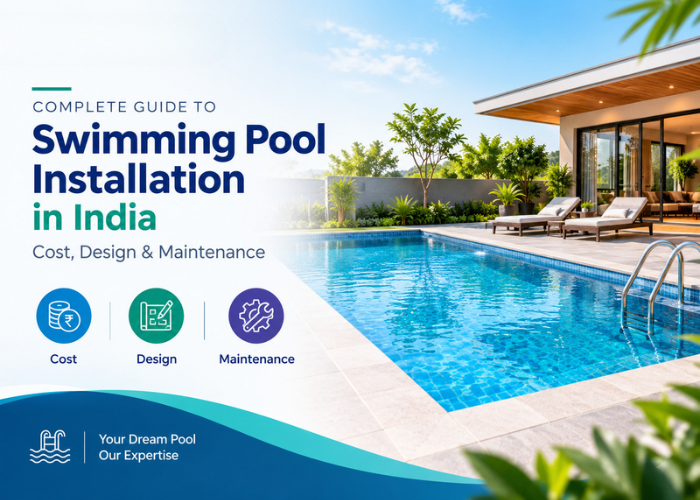
A swimming pool can transform a home, farmhouse, resort, or commercial property, but successful construction involves much more than choosing a shape and filling it with water. The right approach to Swimming Pool Installation considers site conditions, structural strength, waterproofing, filtration, safety, and long-term operating expenses from the beginning.
In India, the overall cost depends on the pool’s dimensions, construction method, location, soil conditions, finishes, and equipment. A well-planned pool balances visual appeal with efficient water circulation, manageable maintenance, and safe everyday use.
This guide explains how to plan your pool, understand the costs, select a suitable design, and maintain it for years to come.
1. What Is the Cost of Swimming Pool Installation in India?
The cost of Swimming Pools Installation in India varies considerably because two pools of the same size can require different amounts of excavation, structural work, waterproofing, and equipment.
For a reliable estimate, request an itemised quotation rather than relying on a single price per square foot.
Key factors that affect swimming pool cost
- Size and depth: Larger and deeper pools generally require more excavation, concrete, reinforcement, finishing materials, and water.
- Construction type: Reinforced concrete pools offer design flexibility, while prefabricated fibreglass or modular options may suit certain sites and budgets.
- Site preparation: Rocky soil, difficult access, groundwater, or proximity to existing buildings can increase construction complexity.
- Waterproofing and finishes: Tile selection, specialist coatings, and waterproofing systems affect both initial cost and future repair requirements.
- Filtration equipment: Pumps, filters, circulation pipes, disinfection systems, and automation influence the initial investment and running costs.
- Additional features: Heating, underwater lighting, infinity edges, waterfalls, and automated covers add to the budget.
How to prepare a realistic budget
Divide the project into four cost categories:
- Civil construction: Excavation, structural work, plumbing provisions, and pool shell.
- Waterproofing and finishing: Waterproofing, testing, tiles or coatings, and coping.
- Equipment and installation: Pumps, filters, electrical systems, lighting, and disinfection.
- External and ongoing expenses: Decking, fencing, landscaping, water, electricity, chemicals, cleaning, and servicing.
Keep a contingency allowance for unexpected site conditions. The appropriate amount depends on how thoroughly the site has been investigated and how complete the contractor’s quotation is.
Practical tip: Ask whether the quotation includes GST, excavation and debris removal, electrical connections, initial water treatment, testing, and commissioning. Exclusions can make an apparently cheaper proposal more expensive.
2. Choosing the Right Swimming Pool Design
The best design is not necessarily the largest or most visually striking. It is the one that fits the available space, intended users, maintenance capacity, and architectural style of the property.
Popular swimming pool designs
Rectangular pools: A practical choice for regular swimming, straightforward layouts, and contemporary homes. Their simple geometry can also make planning and cleaning easier.
Infinity-edge pools: Designed to create a visual effect in which water appears to merge with the surrounding landscape. They need carefully engineered overflow and balancing systems.
Plunge pools: Compact pools intended primarily for cooling off and relaxation. They can work well in smaller outdoor spaces, although circulation and access still require proper planning.
Indoor pools: Useful when weather protection and year-round access are priorities. However, humidity control, ventilation, condensation management, and indoor air quality need specialist attention.
How to choose the right size and depth
Start with the pool’s main purpose.
- For family recreation, prioritise comfortable access, usable shallow areas, and clear visibility.
- For fitness swimming, consider a longer, unobstructed swimming area.
- For children, plan age-appropriate shallow-water facilities and barriers, with active adult supervision.
- For hotels or clubs, consider user capacity, accessibility, changing facilities, emergency equipment, and applicable local requirements.
Avoid adding unnecessary depth simply for appearance. Greater depth can increase construction complexity, water volume, and operating costs. Diving features should never be added without a purpose-designed structure and suitable safety provisions.
3. Swimming Pool Construction: Step-by-Step Process
A properly managed Swimming Pool Installation project follows a defined sequence. Decisions made early in the process influence how well the finished pool performs.
Step 1: Site inspection and planning
Assess available space, soil conditions, drainage, access for construction machinery, water supply, and nearby foundations. Confirm applicable permissions before work begins.
Step 2: Excavation and structural construction
Excavate according to the approved design and construct the pool shell using the specified structural system. Engineering should account for water pressure, surrounding soil, and groundwater conditions.
Step 3: Plumbing and waterproofing
Install circulation lines, drains, returns, and other fittings. Apply a compatible waterproofing system and conduct the specified inspections and leak tests before finishing.
Step 4: Finishing and equipment installation
Complete the pool interior, surrounding deck, filtration equipment, electrical work, lighting, and safety features.
Step 5: Testing and commissioning
Check circulation, filtration, electrical safety, leaks, and water quality. Obtain handover documents and learn how to operate and maintain the equipment.
The project timeline depends on design complexity, approvals, weather, material availability, and curing requirements. Ask the contractor for a milestone-based schedule instead of accepting an unsupported completion promise.
4. Materials and Equipment You Should Not Overlook
A pool’s long-term performance depends on what sits beneath its visible finish.
Essential construction materials
- Structural concrete and reinforcement: Must be specified according to site conditions and engineering requirements.
- Waterproofing system: Select a system compatible with the pool structure, finish, and expected water exposure.
- Pool tiles or interior coatings: Choose durable, water-compatible finishes with suitable slip resistance in surrounding walking areas.
- Pipes and fittings: Use materials suitable for pool circulation, treatment chemicals, and the specified operating pressure.
Essential pool equipment
A typical circulation system includes a pump, filter, suction and return fittings, and appropriate disinfection equipment. Depending on the design, it may also include a skimmer or overflow channel, balancing tank, automatic dosing system, and pool cover.
The Bureau of Indian Standards identifies structural design, water circulation, treatment, and safety as important considerations in pool construction. Its guidance for public swimming pools is particularly relevant to commercial projects.
A useful contractor question: Ask how the proposed pump and filter are sized for the pool’s water volume, pipe layout, expected usage, and required circulation. Equipment should be selected through proper calculations, not simply by choosing the cheapest available model.
5. Swimming Pool Maintenance: Daily, Weekly and Periodic Tasks
Regular maintenance helps keep pool water clean, protects equipment, and identifies problems before they become expensive repairs.
Daily or before use
- Remove leaves, insects, and visible debris.
- Check the water’s appearance and circulation.
- Check disinfectant and pH levels according to the maintenance plan, especially for frequently used pools.
Weekly
- Brush pool walls, steps, and the floor as required.
- Vacuum settled debris and clean skimmer baskets.
- Inspect the filter, pump, and surrounding deck.
- Review chemical readings and adjust treatment according to test results.
Periodically
- Inspect pumps, valves, seals, and filtration equipment.
- Check for cracks, loose tiles, leaks, and unusual water loss.
- Service equipment according to the manufacturer’s schedule.
- Arrange more comprehensive water testing when required.
How to maintain pool water quality
Clear water alone does not prove that a pool is safe. Disinfectant concentration, pH, filtration, and contamination control all matter. Follow the applicable water-quality requirements and the recommendations for your particular treatment system. BIS publishes standards addressing swimming-pool water quality, including IS 3328.
Never mix pool chemicals together or add them without following their labels and the equipment manufacturer’s instructions. Keep chemicals secured in a dry, ventilated storage area away from children and incompatible substances.
For commercial pools, maintain documented inspection, cleaning, and water-testing records.
6. Safety and Permissions Before Construction
Safety should be built into the design rather than added after the pool is complete.
Before starting Swimming Pool Installation, check the following:
- Confirm local building permissions, development rules, and any applicable pool-specific approvals.
- Have a qualified professional assess structural requirements, drainage, and groundwater risks.
- Install suitable barriers or fencing, controlled access, and child-safety measures.
- Use slip-resistant materials around the pool and provide clearly visible depth markings.
- Ensure electrical installations, underwater lighting, and bonding or earthing arrangements are designed and installed by qualified professionals.
- Provide appropriate rescue equipment and emergency arrangements, including trained supervision where required.
India’s building regulations and public-pool safety standards provide useful technical references, but the precise legal requirements depend on the project type and jurisdiction. Check with the relevant local authority before construction.
Bureau of Indian Standards
7. Common Swimming Pool Installation Mistakes to Avoid
Even an attractive pool can become costly if important practical decisions are overlooked.
- Choosing a contractor on price alone: Compare technical specifications, waterproofing details, equipment brands, warranties, and exclusions.
- Ignoring drainage: Poor surface-water management can contribute to waterlogging and damage around the pool.
- Underestimating running costs: Pumps, filtration, water treatment, cleaning, and occasional repairs continue after construction.
- Skipping waterproofing tests: Finishes should not conceal an unverified waterproofing system.
- Overcomplicating the design: Features such as infinity edges and waterfalls add engineering and maintenance demands.
- Neglecting handover documentation: Keep equipment manuals, warranty details, drawings, and maintenance instructions for future servicing.
A simple, well-engineered pool can provide a better long-term experience than a more elaborate design with poorly planned systems.
Frequently Asked Questions
1. How much does swimming pool installation cost in India?
There is no single fixed price. The total depends on dimensions, construction method, location, soil conditions, finishes, equipment, and additional features. Obtain itemised quotations based on a site inspection.
2. How long does it take to build a swimming pool?
The timeline depends on the pool’s design, approvals, construction method, weather, and finishing requirements. Ask your contractor to provide a project schedule with clear milestones.
3. Which swimming pool design is best for a home?
Rectangular pools suit regular swimming and contemporary layouts, while plunge pools work well in compact spaces. The best choice depends on available land, intended use, budget, and maintenance requirements.
4. Is a concrete or fibreglass pool better?
Concrete offers greater flexibility in shape, size, and finish. Fibreglass pools can reduce on-site construction work where a suitable prefabricated shell can be delivered and installed. Site access, structural requirements, local availability, and lifecycle costs should guide the decision.
5. How often should swimming pool water be tested?
Testing frequency depends on usage, weather, treatment technology, and applicable regulations. Residential owners should follow their treatment system’s maintenance instructions and test critical water-quality parameters regularly. Busy commercial pools generally need more frequent monitoring and documented checks.
6. Do I need permission to install a swimming pool in India?
You may need approvals depending on your location, property type, project design, and intended use. Check local development regulations and the relevant authority’s requirements before excavation begins.
Conclusion: Plan Your Swimming Pool for Long-Term Value
A successful swimming pool project combines thoughtful design, reliable construction, effective filtration, and consistent maintenance. Before beginning Swimming Pool Installation in India, evaluate the site, compare detailed contractor quotations, verify local permissions, and prioritise waterproofing and safety over decorative extras.
The smartest investment is a pool that suits your property, remains manageable to operate, and delivers lasting value.
Planning a swimming pool project? Consult an experienced pool designer or contractor for a site assessment, a customised design, and a transparent cost estimate before construction begins.
Blog Categories
Recent Post
Complete Guide to Swimming Pool Installation in India: Cost, Design & Maintenance
October 28, 2026What Is a Musical Water Fountain in Delhi?
October 14, 2026OASE Fountain Equipment in India: Features & Benefits
September 29, 2026Complete Guide to Swimming Pool Installation in Delhi
September 11, 2026Facade Lighting in India: Types, Benefits and Cost Explained
August 25, 2026Water Fountain Manufacturers in India: Complete Buying Guide
August 11, 2026